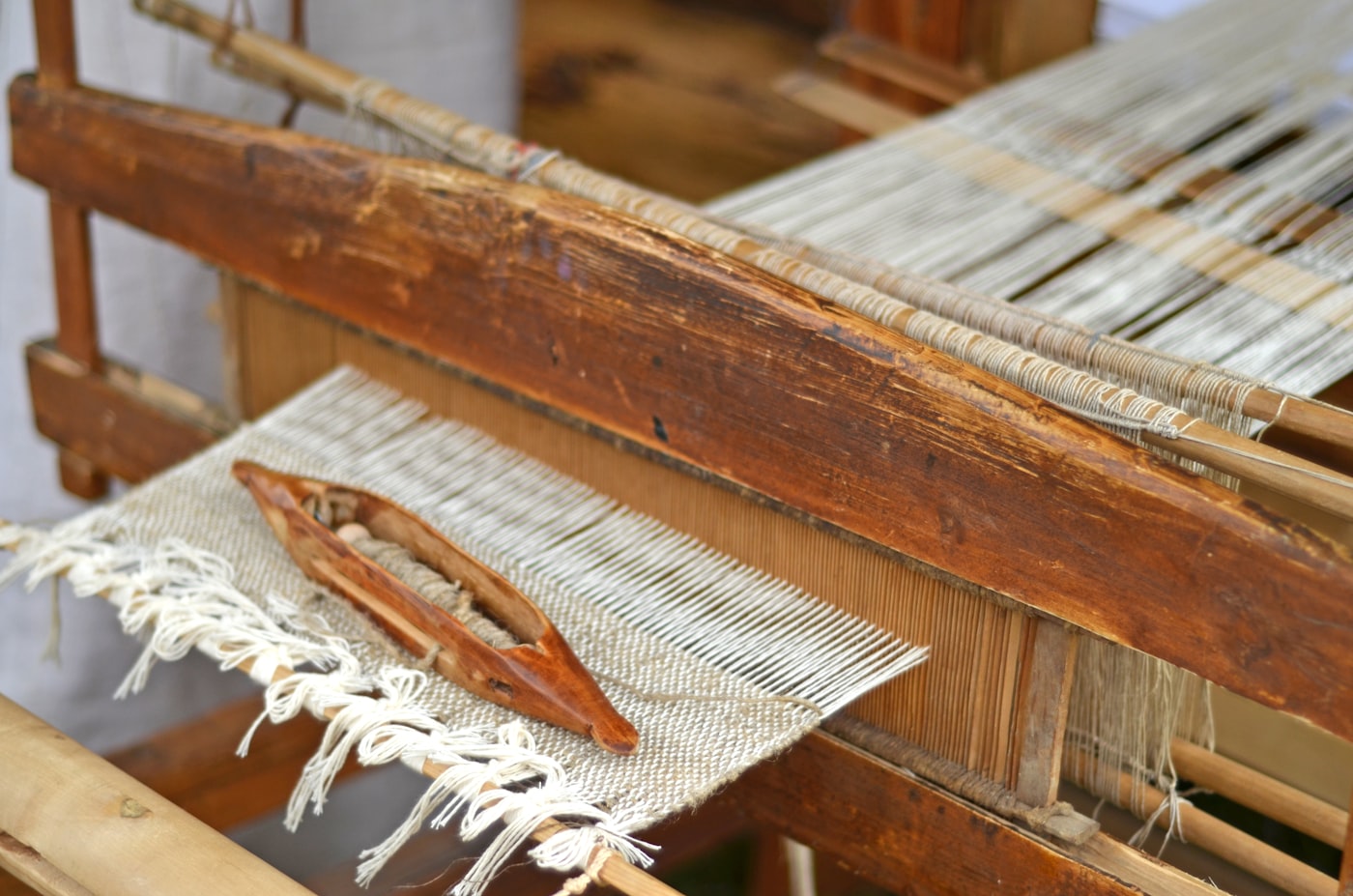
Every Banarasi motif begins as a drawing, and every drawing must become instructions a loom can follow. That translation is the naqsha: the design plotted point by point, then tied into a lattice of cotton cords that hangs above the pit loom like a rigging.
The men who make them are called naqshabands, and there are fewer of them left in Banaras than there are looms. A good naqsha outlives its maker. The jangla on our looms this season was tied decades ago; the weaver who follows it today is reading his grandfather's handwriting.
A saree is finished in weeks. A naqsha is finished in generations.
When you turn one of our sarees over and see the clean reverse of a Kadhwa field — no floats, no shortcuts — you are looking at the naqsha's discipline as much as the weaver's. The design was solved before the silk was ever touched.
This is why we say the cloth is remembered, not made. The loom already knows the pattern. The weaver’s work is to listen to it, thread by thread, until the memory is complete.