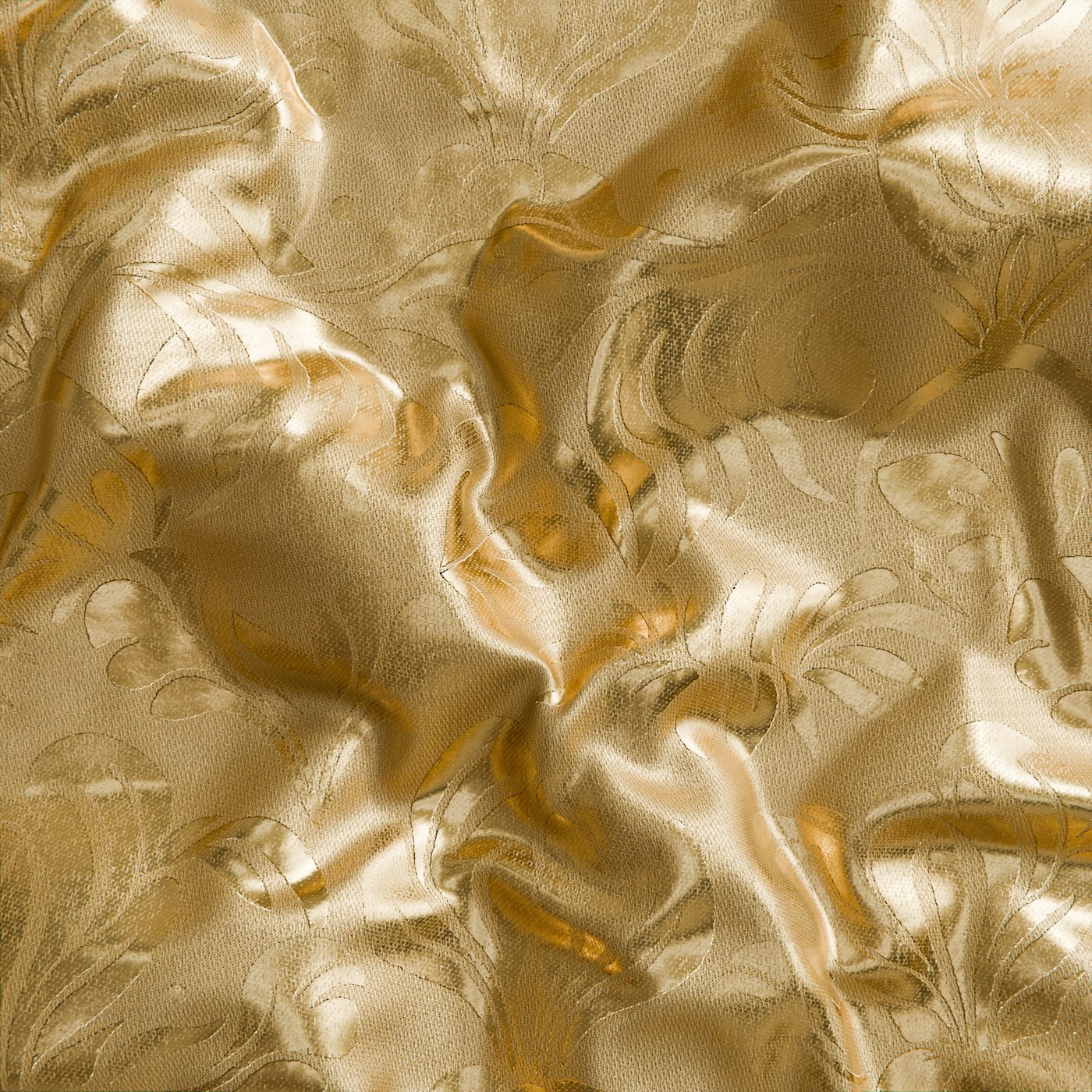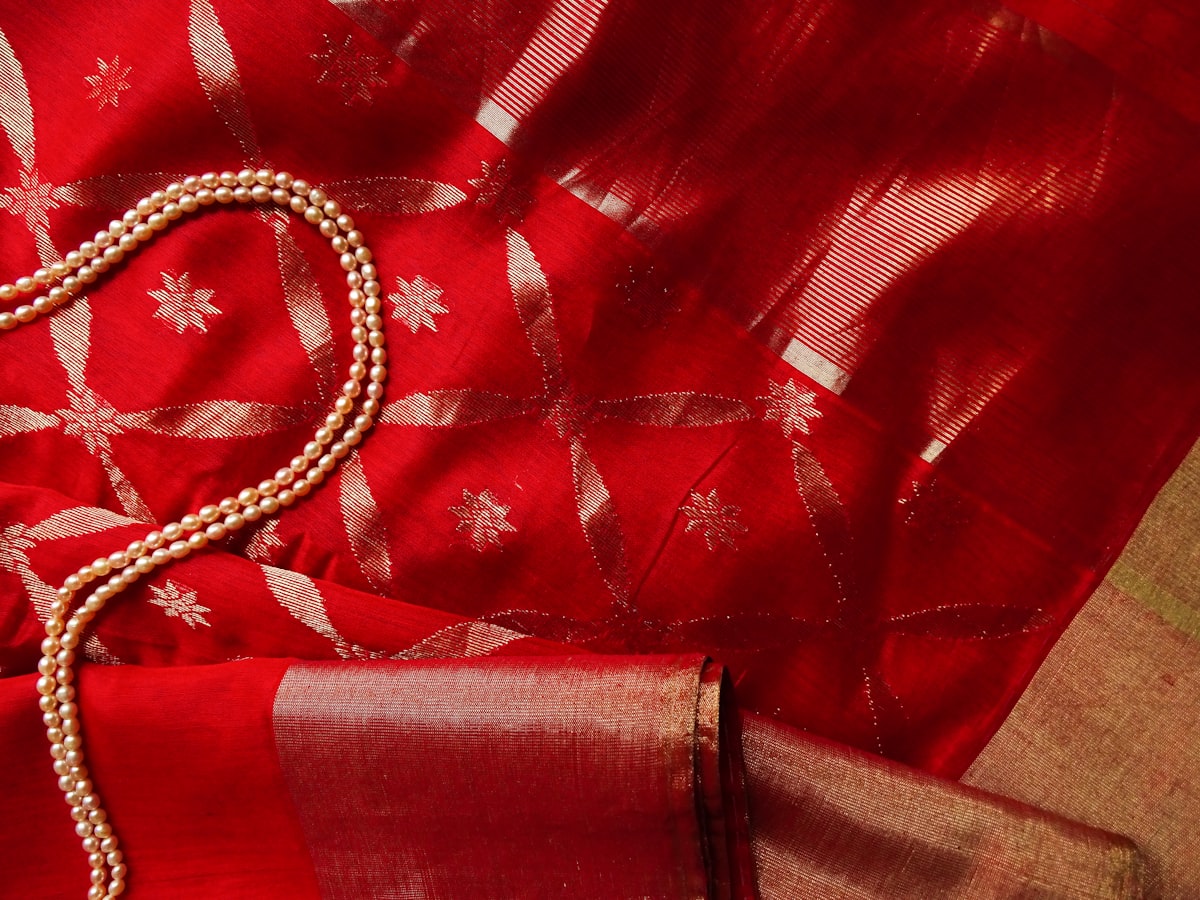
Real zari begins as silver wire, drawn finer and finer until it is closer to thread than metal, then flattened, wound around a silk core, and gilded. The old name says it plainly: sona-rupa — gold over silver. It tarnishes slowly, polishes back, and grows kinder with age, the way real metal does.
The imitation is polyester film, metallised and sliced. It costs a fraction, weighs nothing, and dies quickly — it frays, dulls, and cannot be repaired. A saree woven with it can look convincing across a shop counter and cheap within two weddings.
Real zari grows kinder with age. Plastic zari just grows old.
This is why every certificate we issue names the zari. Not "gold work" — silver-gilt, tested. If a piece uses tested zari, its border can be re-polished by your grandchildren. That sentence is the entire argument for the price.
Hold a real border to the light and turn it. The gleam should move like water, not like foil. Once you have seen the difference, you cannot unsee it.